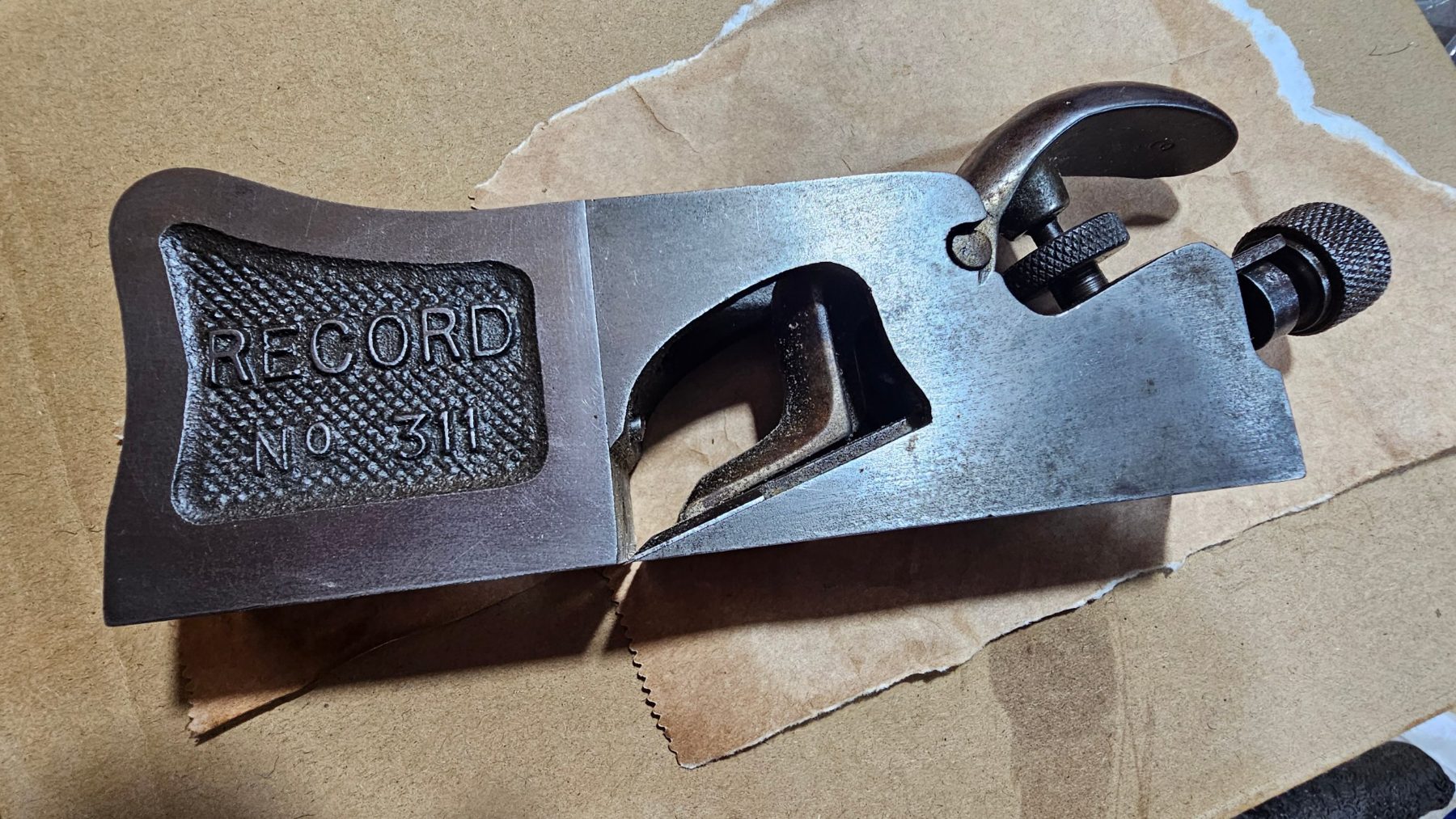
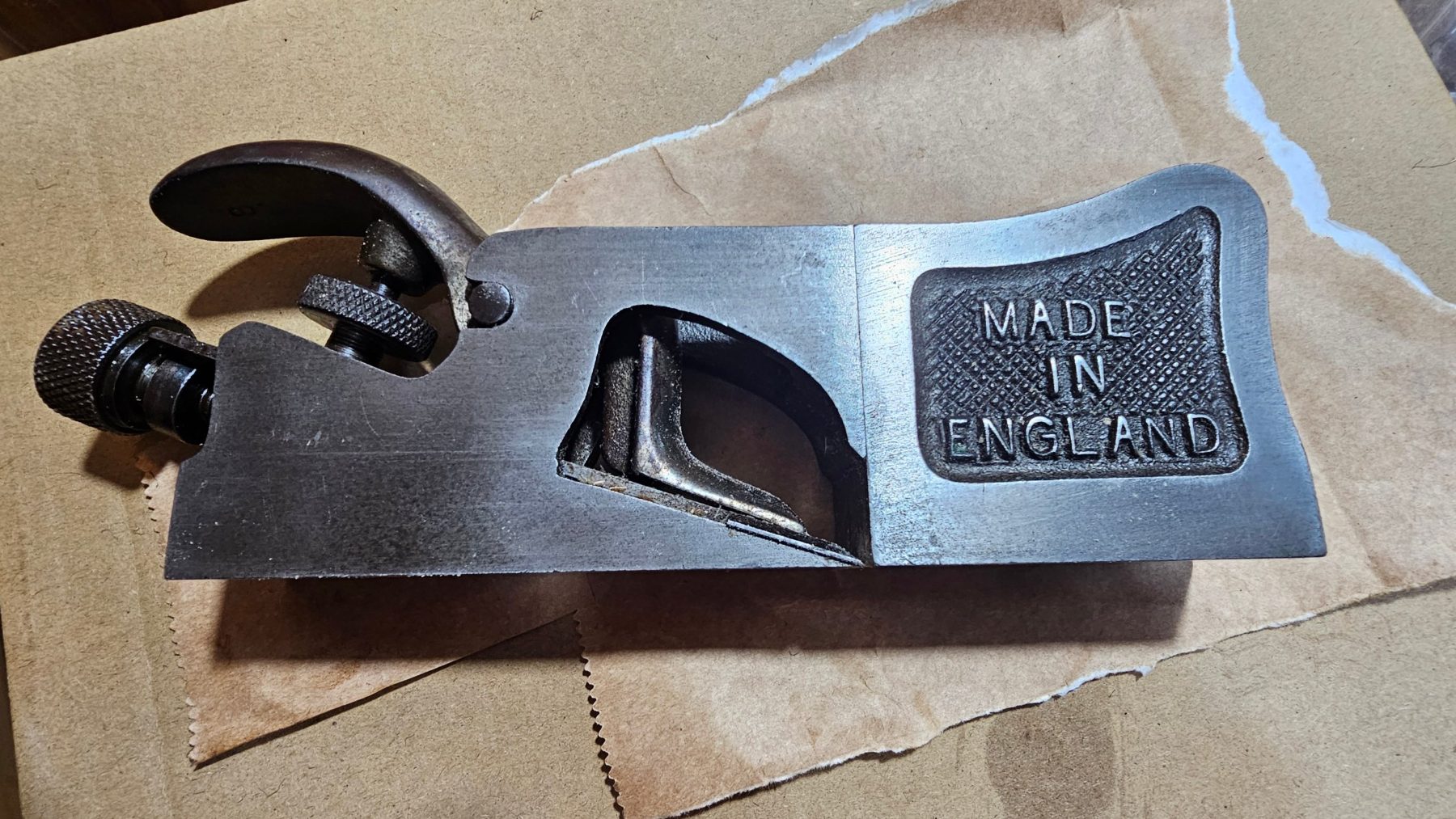
Record No. 311 (Three-in-One)
Record
Item passport
- Maker
- Record
- Country
- United Kingdom
- Dating
- The model was produced 1935–1982 and again 1987–1994; this example is dated to the 20th century, the exact year is not established.
- Condition
- A restored working tool with a razor-sharp iron. The adjusting mechanism and the clamp are preserved. Small marks of earlier corrosion are visible on the machined metal; the age…
Dimensions
- Iron, nominal28.6 mm
Combination rabbet plane for the precise fitting of rabbets, tenon shoulders and other joints. Three configurations depending on the nose piece fitted: an ordinary shoulder plane, a short-nosed bullnose, and an open-fronted chisel plane for working right up…
Read the storyHistory
Combination rabbet plane for the precise fitting of rabbets, tenon shoulders and other joints. Three configurations depending on the nose piece fitted: an ordinary shoulder plane, a short-nosed bullnose, and an open-fronted chisel plane for working right up against an obstruction. Cast-iron body with machined sides, a steel iron running the full width of the body, and screw depth adjustment. Nominal iron width about 28.6 mm. The model goes back to a design by Edward Preston & Sons.
Dating. The model was produced 1935–1982 and again 1987–1994; this example is dated to the 20th century, the exact year is not established.
Parts and their origin
| Body | Record, England RECORD No 311 · MADE IN ENGLAND |
|---|---|
| Iron | Record, England width 28.6 mm |
| Other |
|
Marks and stamps
-
documented
Cast marking RECORD No 311 in a raised panel on the side of the body.
-
documented
Cast lettering MADE IN ENGLAND in a raised panel on the opposite side.
Restoration
Cleaning: rust was removed by hand with very fine Scotch-Brite and WD-40, a gentle treatment that keeps the character of an old tool. Sharpening: the iron was brought to a razor edge with a Veritas Honing Guide Deluxe II; the bevel angle and the abrasive sequence were not recorded. Preservation: the whole plane was wiped with ISO 68 oil (the oil brand is not established; ISO 68 denotes a viscosity grade). The raised marking panels, the casting texture and the traces of use were kept.
Work history
- 2026: rust was removed by hand with very fine Scotch-Brite and WD-40, keeping the character of the old tool.
- 2026: the iron was brought to a razor edge with a Veritas Honing Guide Deluxe II.
- 2026: the whole plane was wiped with ISO 68 oil. Restoration is complete.
Sources
Research status
The exact year of this example, the bevel angle and the oil brand are not established. The completeness of the set of nose pieces has not been checked.
Purchase and price
Place of purchase and price are visible after signing in. Sign in