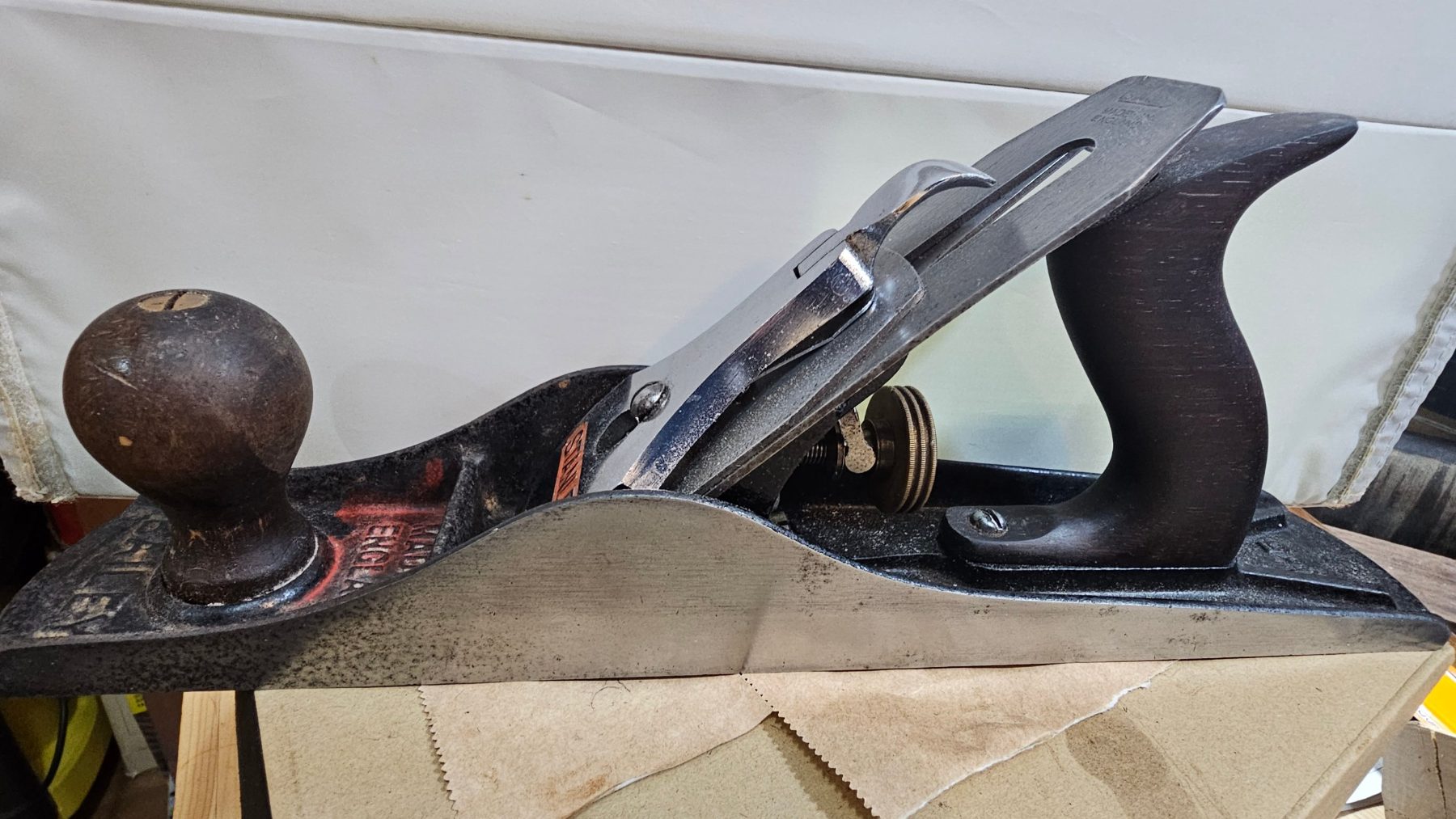
Stanley Bailey No. 5 (jack plane)
Stanley · 1965–1969
Item passport
- Maker
- Stanley
- Country
- United Kingdom
- Dating
- Approximately mid to late 1960s; presumably English Type 5.
- Condition
- Restoration is complete and the plane is fully functional. According to the owner it works perfectly: it has planed spruce from a former pallet and very hard wood, including…
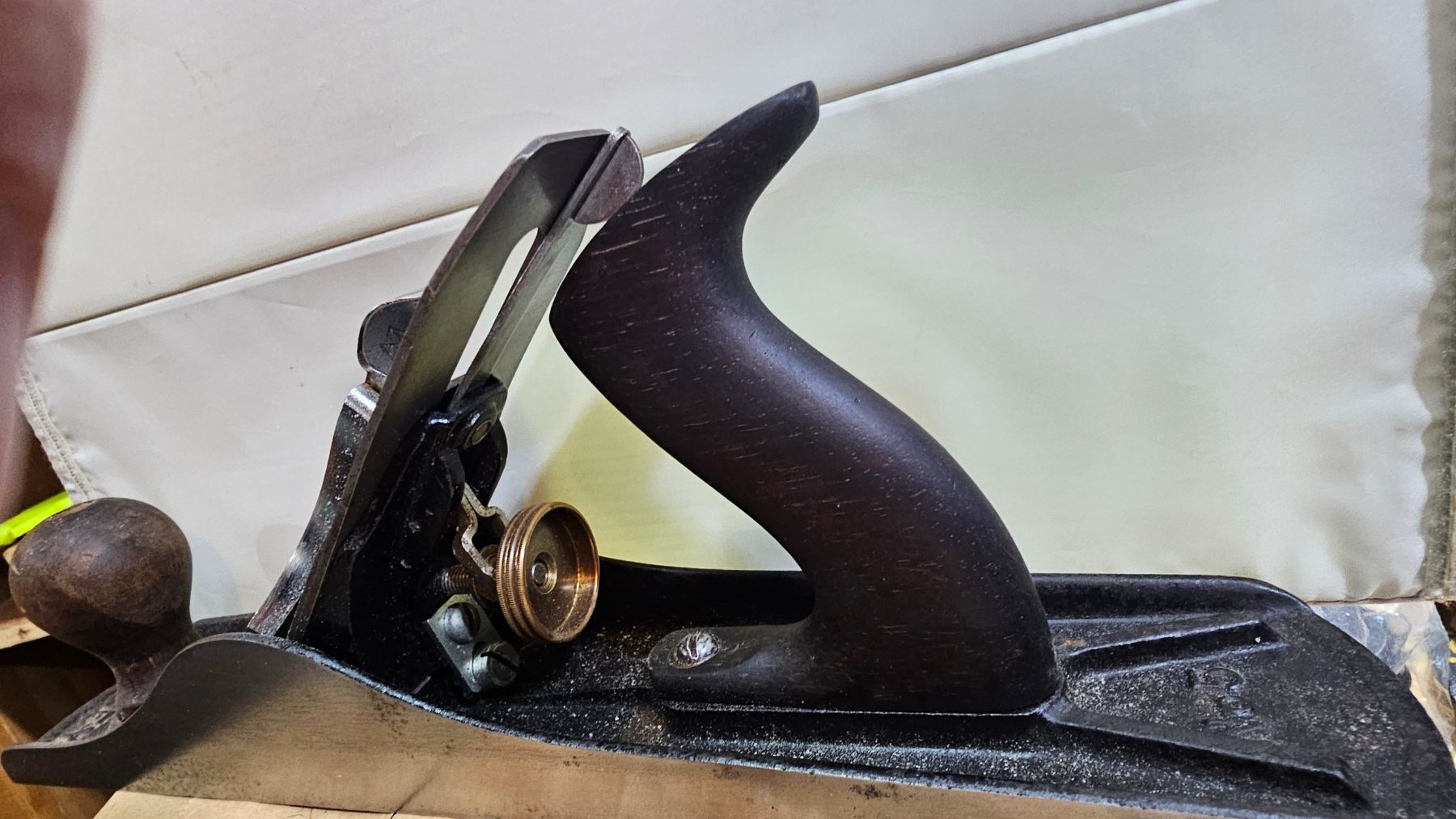
English metal bench plane of the Bailey pattern. Cast-iron body, screw depth adjustment and lateral lever, double iron with a chip breaker (bevel down), wooden front and rear handles, brass adjusting wheel.
Read the storyHistory
English metal bench plane of the Bailey pattern. Cast-iron body, screw depth adjustment and lateral lever, double iron with a chip breaker (bevel down), wooden front and rear handles, brass adjusting wheel.
Dating. Approximately mid to late 1960s; presumably English Type 5.
Parts and their origin
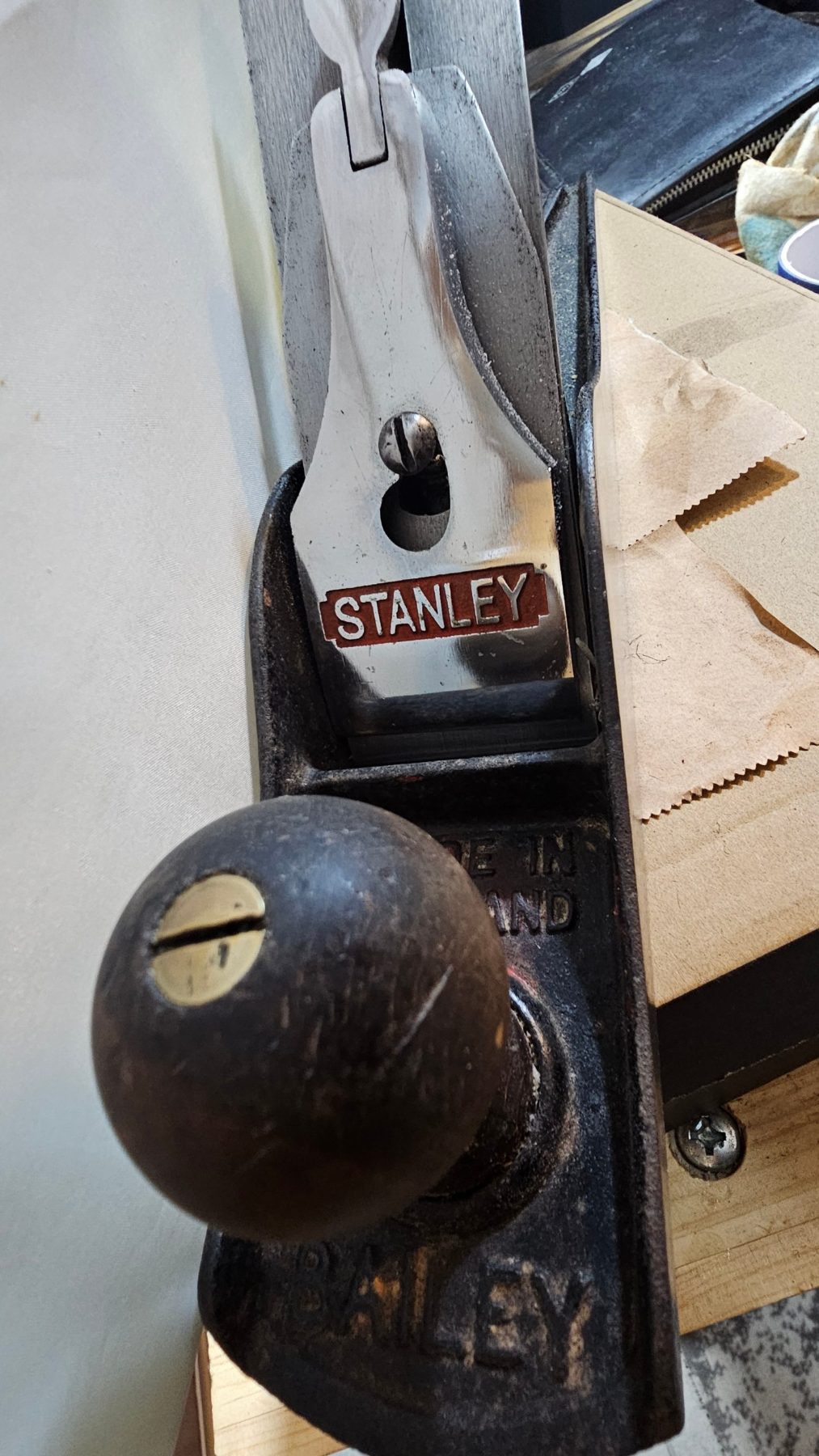
| Body | Stanley, England STANLEY · BAILEY · MADE IN ENGLAND |
|---|---|
| Iron | Stanley, England MADE IN ENGLAND |
| Handle |
|
Marks and stamps
-
documented
STANLEY mark in a red panel on the cap iron (lever cap).
-
documented
Cast lettering BAILEY and MADE IN ENGLAND on the body by the front handle.
Restoration
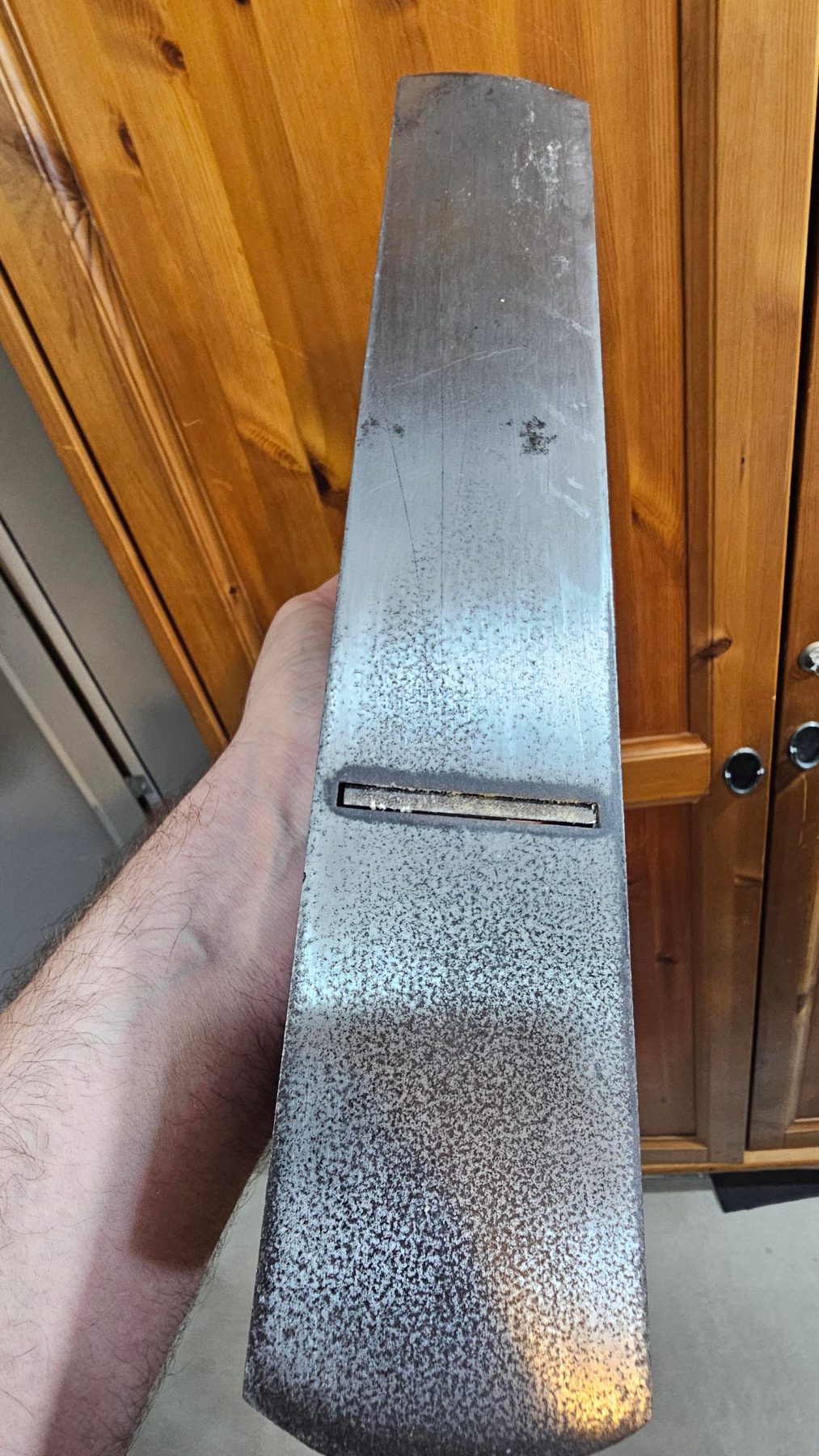
April 2026: the iron was sharpened with a Veritas guide at 30°, the burr removed on 240 abrasive and honed up to 1500 grit. August 2026: the old lacquer was removed from the handles and they were lightly sanded; the front handle was finished with 400 abrasive and Danish oil, keeping minor wear marks and the dark character of the wood. The sole was flattened by hand on 400-grit paper stuck to glass; the pits were kept.
Work history
- April 2026: the iron was sharpened with a Veritas guide at 30° and honed up to 1500 grit; a very sharp edge was achieved.
- August 2026: the old lacquer was removed from the handles and the front handle was finished with 400 abrasive and Danish oil.
- The sole was flattened by hand on 400-grit paper stuck to glass; pits from earlier corrosion were kept. Restoration is complete.
Sources
Research status
The exact year of manufacture and the final sharpening angle are not established. The handles are presumed to be stained beech.
Purchase and price
Place of purchase and price are visible after signing in. Sign in