Wilhelm Braun Rundhobel (round plane), 50
Wilhelm Braun, Plochingen · 1890–1918
Item passport
- Maker
- Wilhelm Braun, Plochingen
- Country
- Germany
- Dating
- Approximately 1890s to 1918. The firm was registered at Plochingen in 1876; its 1891 catalogue already lists a Rundhobel; in 1918 Braun merged with Laupheimer Werkzeugfabrik. The solitary ♥ W.B. mark is consistent with the pre-merger period but gives no precise date.
- Condition
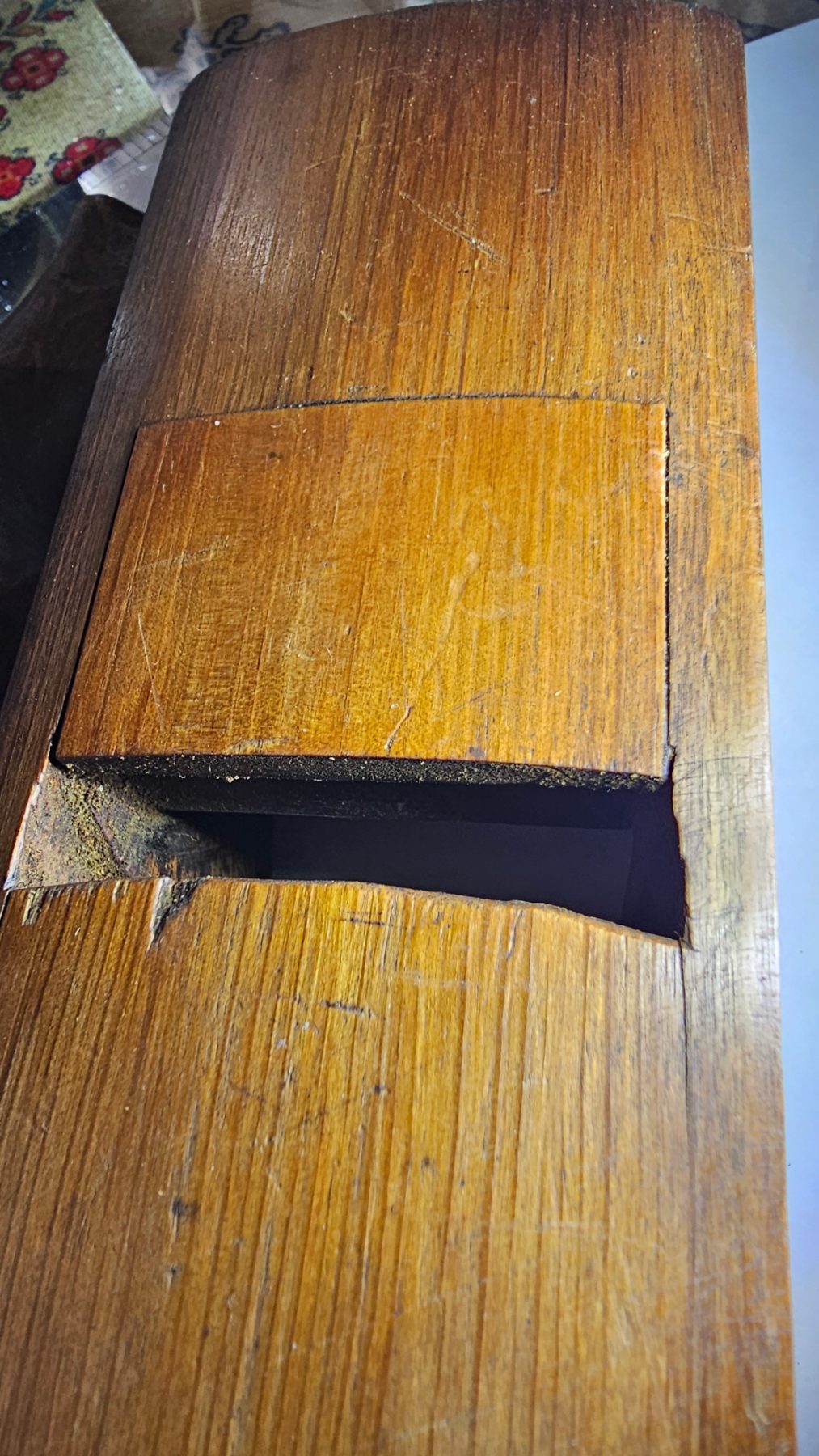
- Historic repair: a large fitted wooden insert ahead of the mouth, interpreted as an old repair to the worn working area, kept as part of the object's history. Pencil marks were…
Dimensions
- Iron, measured51.1 mm
- Cap iron, measured50.2 mm
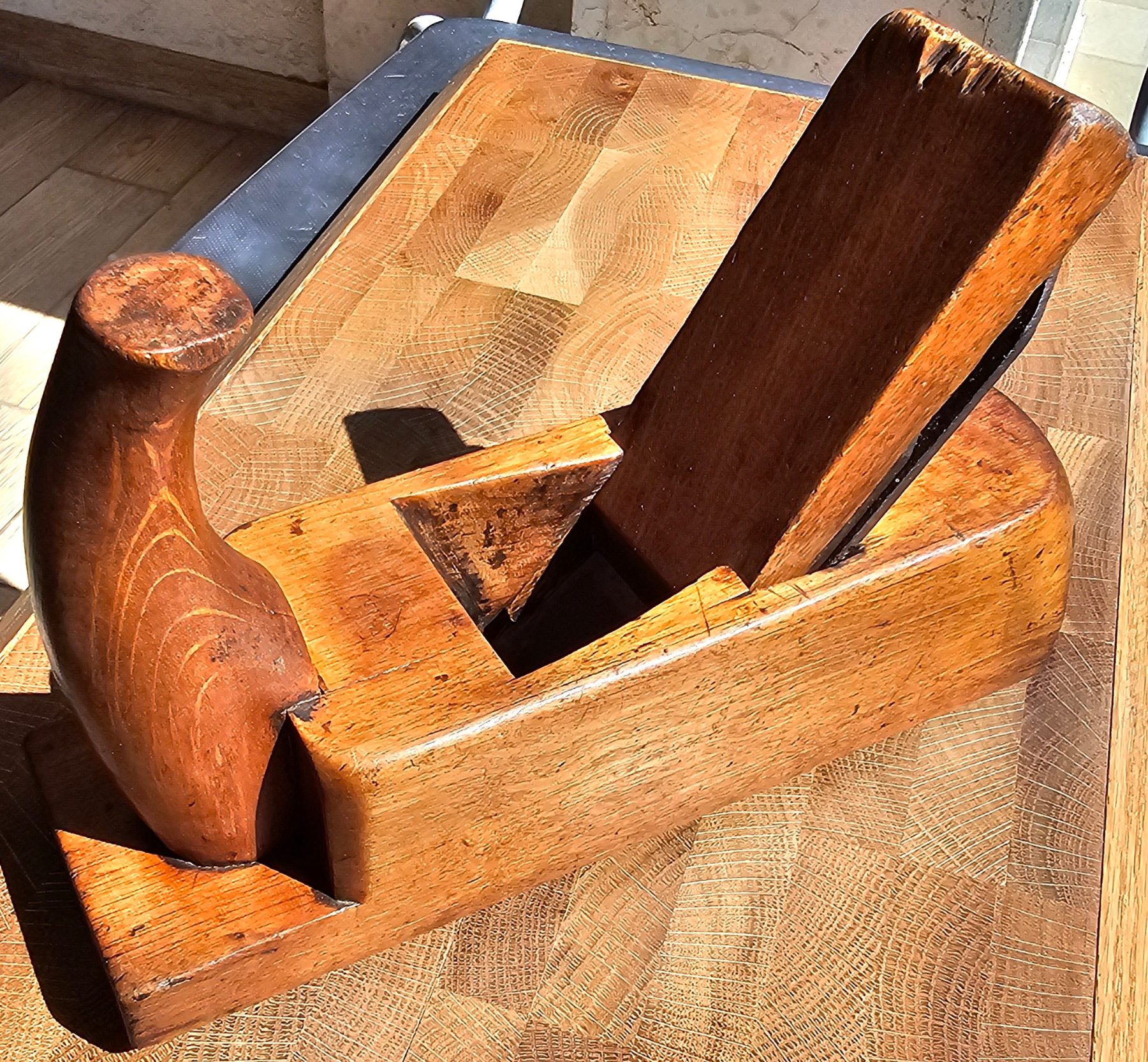
Wooden Rundhobel: sole straight along the direction of travel and convex across its width, with a matching curvature of the cutting edge. Wilhelm Braun's 1891 catalogue lists a Rundhobel among cooper's tools. Body approx. 210 × 68 mm, beech, horn-style front…
Read the storyHistory
Wooden Rundhobel: sole straight along the direction of travel and convex across its width, with a matching curvature of the cutting edge. Wilhelm Braun's 1891 catalogue lists a Rundhobel among cooper's tools. Body approx. 210 × 68 mm, beech, horn-style front handle and wooden wedge.
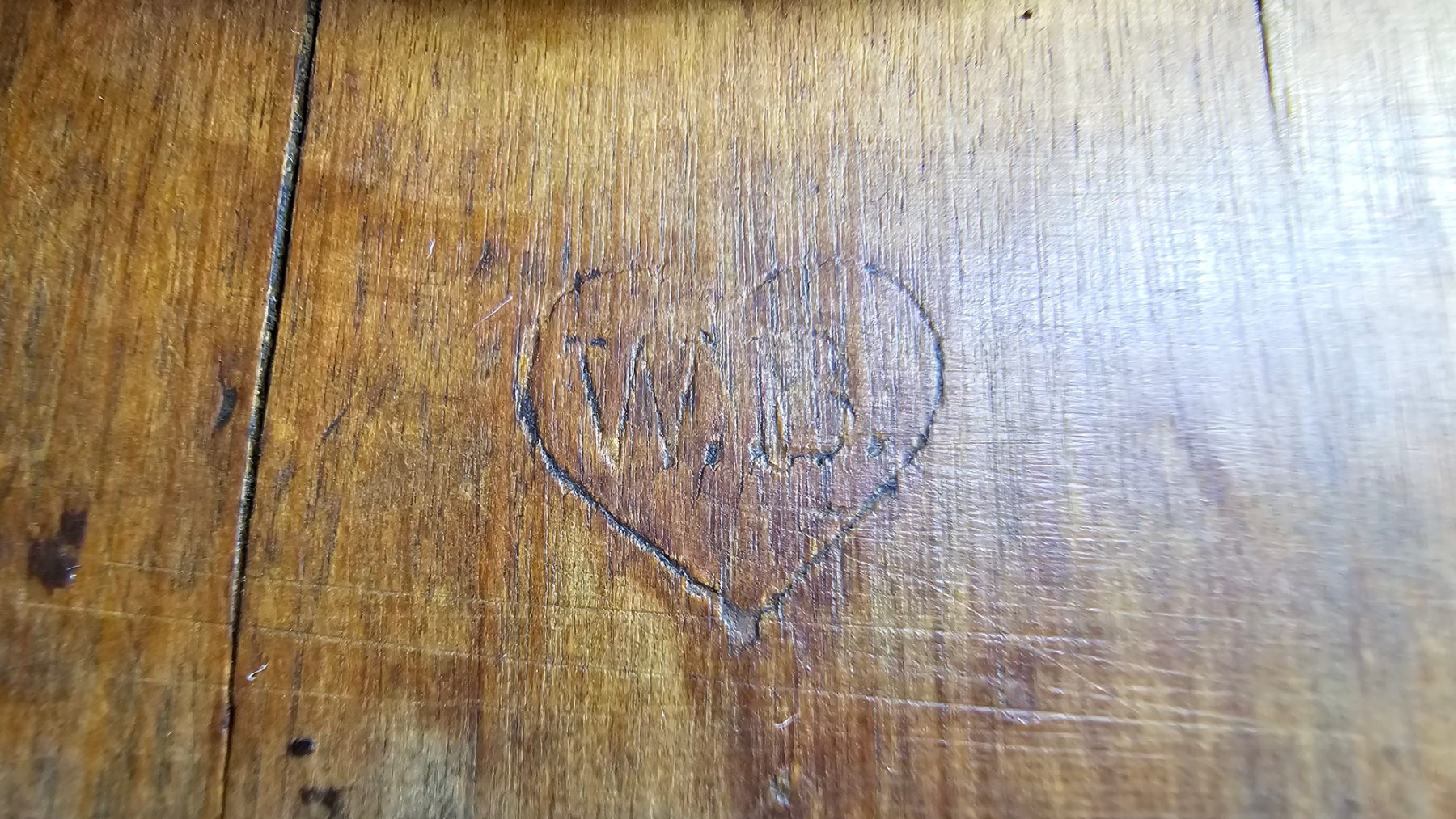
Dating. Approximately 1890s to 1918. The firm was registered at Plochingen in 1876; its 1891 catalogue already lists a Rundhobel; in 1918 Braun merged with Laupheimer Werkzeugfabrik. The solitary ♥ W.B. mark is consistent with the pre-merger period but gives no precise date.
Parts and their origin
| Body | Wilhelm Braun, Plochingen ♥ W.B. |
|---|---|
| Iron | Wilh. Schmitt & Comp., Remscheid Zwei Kirschen / KIRSCHEN, MARKE / GARANTIE width 51.1 mm |
| Cap iron | Jacob Busch, Remscheid Spannsäge, 55 width 50.2 mm |
Marks and stamps
-
documented
Heart with the initials W.B. A solitary mark, consistent with the period before the firm's 1918 merger.
-
unattributed
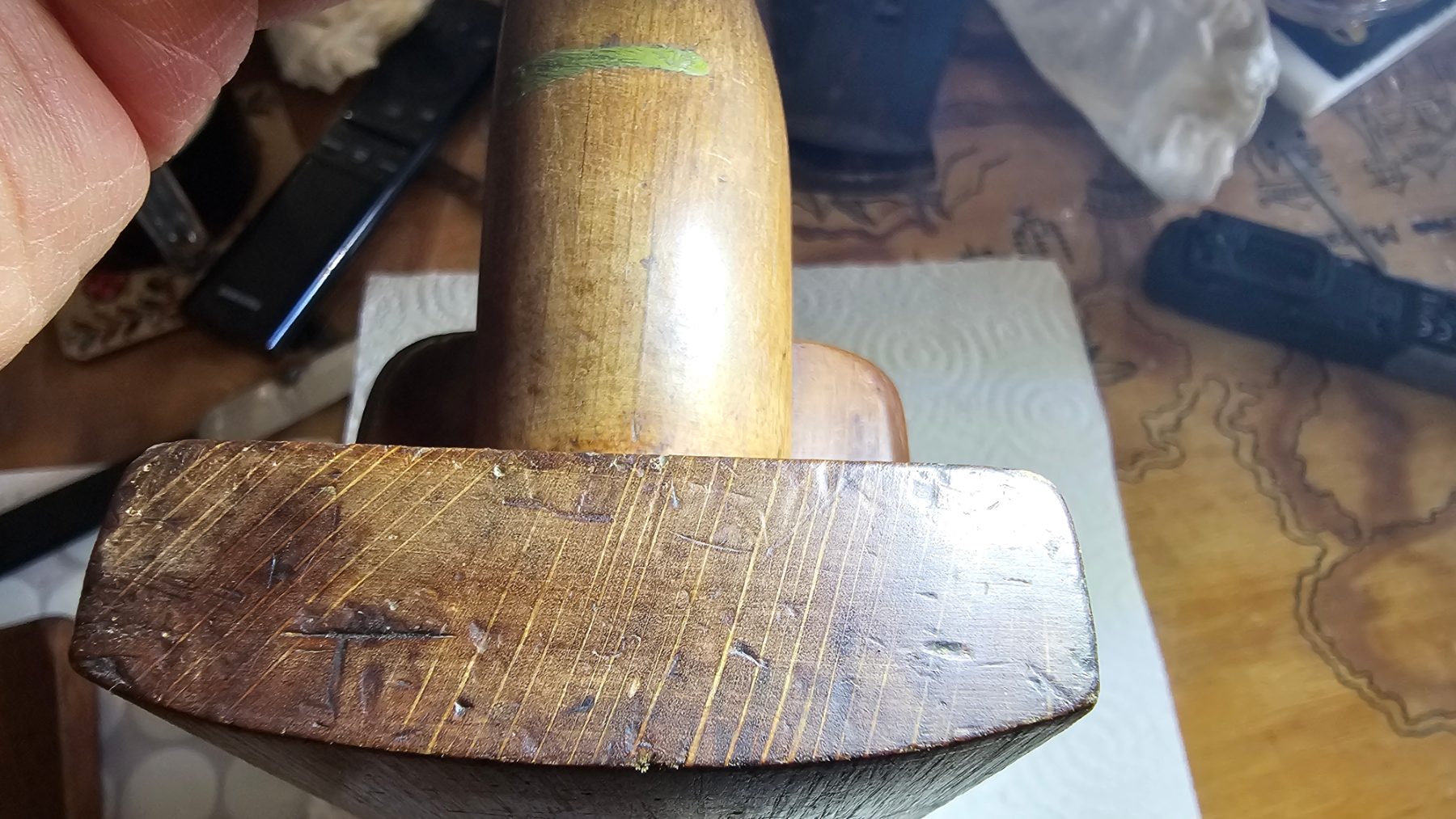
Stamp 50 on the rear striking area. Meaning unconfirmed; with a measured 51.1 mm iron a nominal c. 50 mm size is plausible but remains a hypothesis.
-
unattributed
Separate stamp 55 on the cap iron. Meaning unresolved.
-
unattributed
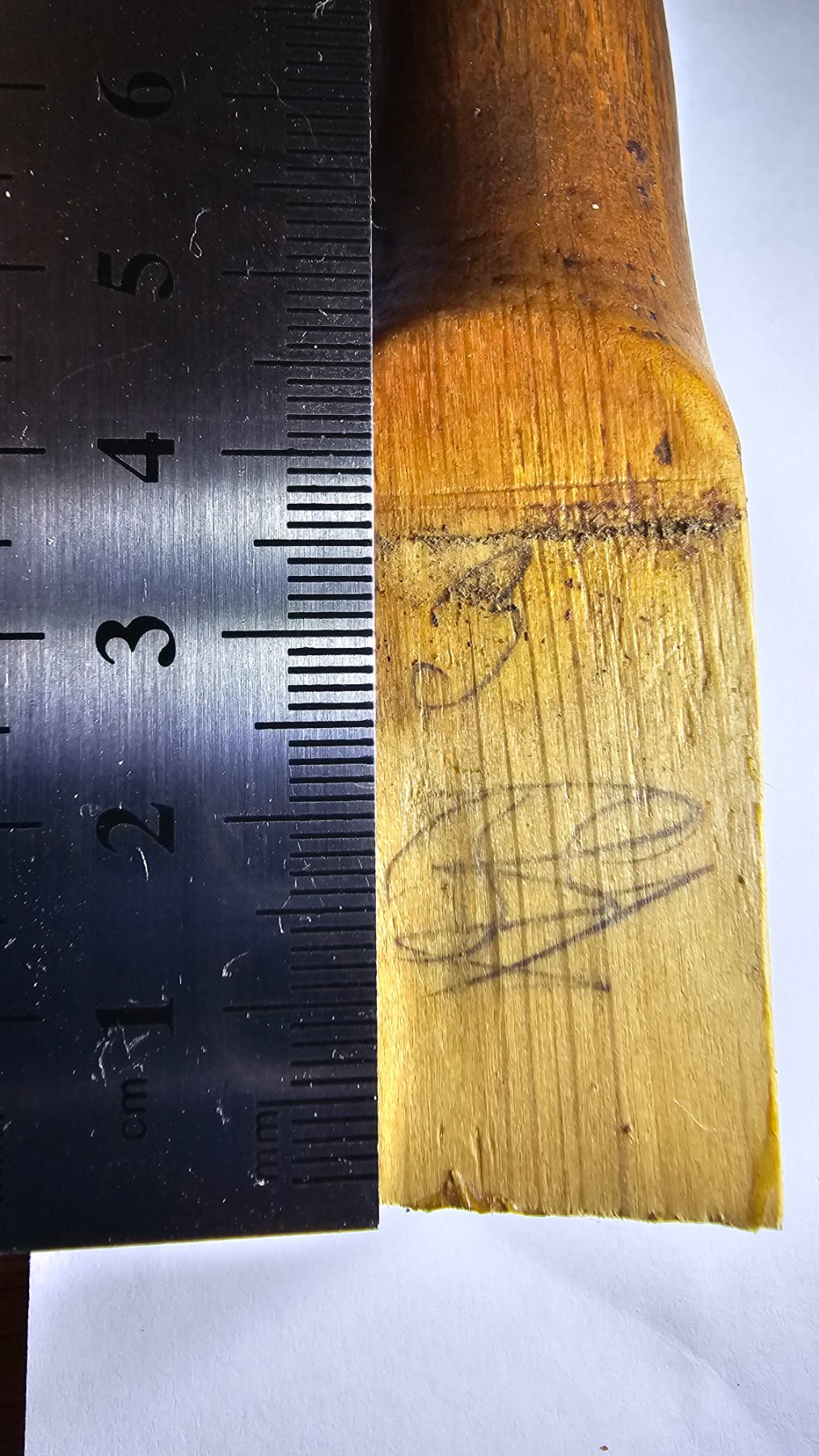
Pencil marks on the concealed face of the horn tenon. The larger resembles a flourish or monogram; possibly a personal or assembly mark.
Restoration
7 Oct 2026: body cleaned with alcohol. The horn and a detached small strip were returned to their positions with minimal adhesive; both seat tightly. Only loose surface rust was removed from the iron and cap iron, and the metal was conserved with ISO 68 oil. Sharpening is deferred. Wax conservation of the body is planned once the adhesive has cured.
Work history
- Body cleaned with alcohol; horn and strip re-seated; surface rust removed from the iron and the metal oiled with ISO 68.
- Sharpening the iron and refining the cap iron.
- Wax conservation of the body once the adhesive has fully cured.
Sources
Research status
Attribution of the body, main iron and cap iron is high-confidence. Open questions: exact catalogue model and date, the meaning of the "50" and "55" stamps, originality of the metal assembly, and the pencil mark.
- Wolfgang Jordan / Kleines Werkzeugmuseum: Wilhelm Braun, Plochingen
- Wilhelm Braun catalogue, 1891
- Jacob Busch «Spannsäge»
- Documented ♥ W.B. Simshobel
Purchase and price
Place of purchase and price are visible after signing in. Sign in